Annual Forum 2026 brings the catchment together at Tharwa
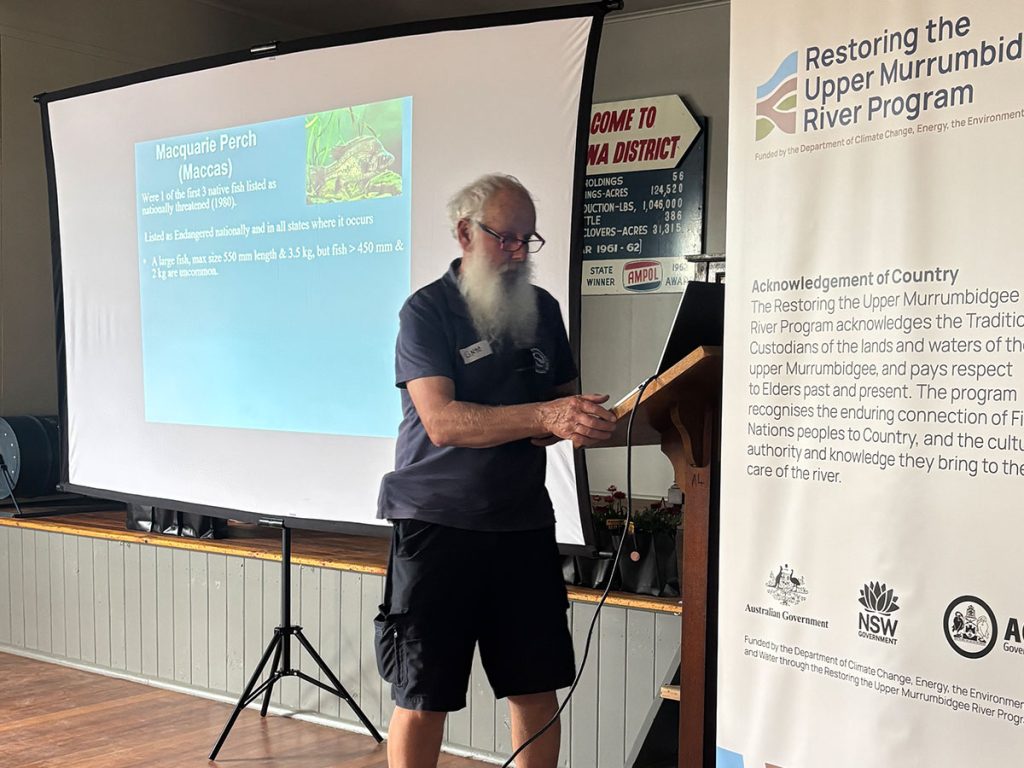
Researchers, landholders, community groups, First Nations representatives and government representatives gathered at Tharwa Hall on Thursday 19 November for the inaugural Restoring the Upper Murrumbidgee Program Annual Forum.
The day opened with a Welcome to Country from Uncle Warren Daley. Speakers from the ACT and Australian governments then set the scene, before presentations on the science, on-ground works and community stewardship underway across the upper Murrumbidgee.
Connection to Country
Julie Moore from Koorimunication brought the room together to think about Aboriginal engagement, and how connection to Country can be built into all the work happening across the river.
Murray crayfish, habitat and flow
Bec Wood from NSW DCCEEW explained how researchers are tracking the Murray crayfish, a vulnerable species that can grow to three kilograms. The results will show the flows and habitat it needs to survive. Read more
Measuring river condition from the air
Will Higgisson from the University of Canberra is using drones at 25 sites to build a repeatable measure of river condition over time. Read more
Algal blooms and water quality
Dr Jordan Facey from the University of Technology Sydney shared early results from monthly sampling at 14 sites. They include high nitrate levels from the Molonglo River and sudden temperature drops below Tantangara Dam after large releases. Read more
The river food web
Professor Simon Mitrovic and Zoe Bassett, also from UTS, spoke about a project working out the flows needed to sustain the food web that feeds fish and other river life. Read more
Young Murray cod, habitat and flow
Matt Beitzel from the ACT Government outlined yearly sampling of juvenile Murray cod at eight sites. Genetic analysis will show how young fish disperse and how flow affects breeding. Read more
Naas and Gudgenby works
Lori Gould from Environmental Restoration Design and Planning shared results from works on 13 properties, including 5,690 metres of fencing and 1,700 plants. Her advice: early wins come quickly, but lasting results depend on long-term relationships with landholders.
Mapping the shape of the river
Rod Tansley from SandMap showed how his team kayaked from Tantangara Dam to the ACT border to map the river’s depth and shape. Read more
Erosion works
Mark Eccleston from South East Local Land Services outlined the program’s largest on-ground project, tackling priority erosion sites along more than 380 kilometres of river.
Macquarie perch genetic rescue
Professor Mark Lintermans AM explained how young Macquarie perch are being moved between reaches to rebuild genetic diversity in one of the species’ largest remaining populations. Read more
Bird activity
Zohara Lucas from Southern ACT Catchment Group and BirdLife Australia’s Shirali Dave and Paul Russell led a bird activity, showing how different birds use the trees and plants along the river to nest and feed. Attendees learned how healthy bird habitat contributes to the overall health of the riverbanks and the wider river corridor.
To hear about future events, subscribe for updates.